


Why Choose Us
Our service
Our team is take fast action for customer experience. We guarantee to reply your email in less than 24 hours in working days.
Advanced Equipment
With complete advanced production testing equipment, perfect quality assurance system ,and stable ,reliable product quality,we won user's consistent high praise.
Quality & Risk Management
We ensure the high quality standard by industry-specific expertise and execute sample approval for every new business.
Global Shipping
We have long-term logistic partner to enhance the stability of transportation and well manage potential shipment risk.
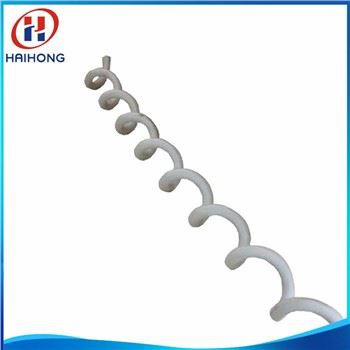
What is Spiral Vibration Damper
A spiral vibration damper is a device used to lengthen the cable line’s service life. It is also known as a Stockbridge damper or an SVD. Spiral vibration damper helps to mitigate the effects of aeolian vibration. This is from wind-induced oscillations in the conductors which can lead to failures. The SVD consist of two masses connected to the conductor by means of helical springs. The masses position equidistant from the point of attachment to the conductor. They also have designs to oscillate out of phase with natural frequency of the conductor system. using spiral vibration ensures the structural integrity and longevity of the system. This is especially in areas prone to high winds or other environmental factors. Spiral vibration dampers are essential to maintain the reliability of the electrical grid.


Benefits of Spiral Vibration Damper
Environmental adaptability
SVDs have designs to withstand a variety of environmental conditions. These include high winds, temperature variations and exposure to UV radiation. This helps to ensure reliable performance in diverse geographical locations and climatic conditions.
Improved power quality
Line vibrations can affect the quality of power delivered to consumers. Svds contribute to maintaining consistent power quality and reduce the risk of outages.
Extended lifespan
This is by reducing the amplitude of vibration and mitigating the stresses on the conductors. This helps utilities and operators reduce maintenance costs and optimize the long-term performance of their assets.
Vibration reduction
The primary benefit of spiral vibration dampers is to reduce vibration. This helps reduce the risk of fatigue failure in conductors, insulators and other components. This enhances the reliability and safety of the transmission system.
Enhanced system reliability
Vibration can lead to dynamic instabilities in transmission lines. Spiral vibration dampers help stabilize the system by controlling the vibrations. They also ensure the lines remain in place even during adverse weather conditions.
Cost effectiveness
Spiral vibration dampers offer a cost-effective solution for managing aeolian vibration. This is as compared to other alternatives such as increasing conductor size. Svds also provide effective vibration control without increasing the weight of the infrastructure.
Types of Spiral Vibration Damper
Helical coil dampers
The dampers consist of helical coil springs attached to the conductor at regular intervals. The springs also absorb and dissipate aeolian vibration energy. This also reduces the amplitude of oscillations and enhancing the structural stability.
Stockbridge dampers
These are the most used types of spiral vibration dampers. They consists of a central weight suspended by two or more steel messenger wires. The weight acts as offset while the brackets provide aerodynamic resistance to the wind-induced vibrations. They control a wide range of vibration frequencies and are suitable for various conductor sizes.
Fluid dampers
These use the thickness of a fluid to dissipate vibration energy. They consist of a chamber filled with the damping fluid through which the conductor passes.
Twin-conductor dampers
These are for bundled conductors while many conductors’ group together. They feature a central weight suspended by two messenger wires. The dual configuration allows for effective damping of vibrations in bundled conductors.
Spacer dampers
Spacer dampers help to control vibrations on systems used on high voltage systems. They install onto the spacer units and feature a helical bracket that generates a smooth force.
Hybrid dampers
These combine many damping mechanisms like combining helical coil springs with frictional elements. This helps to achieve enhanced vibration control and stability in overhead transmission lines.
Application of Spiral Vibration Damper
Overhead Shield Wires
These are installed on overhead transmission lines to protect the lines from lightning.
Optical Ground Wires
These are fashioned to replace traditional static/shield/earth wires on overhead transmission lines which contain optical fibers that can be used in telecommunication lines.
Overhead Ground Wires
These are placed on transmission lines as air terminals for lightning strikes to protect the conductors from direct strike.
Distribution Spans
This refers to variation of the distance that the power is being supplied to.
Components of Spiral Vibration Damper
Weights
These are the primary damping elements of the damper. They are cylindrical in shape and attach to the conductor via springs. The weights also help stabilize the conductor and dissipate vibration energy.
End fittings
These attach the spiral vibration damper to the conductor. They provide a secure connection while allowing the damper to move and respond to vibration.
Housing
Some of the spiral vibration dampers feature a housing or enclosure to protect the internal components. They protect them from environmental factors such as moisture, dust and uv radiation.
Fasteners and hardware
These are fasteners used to assemble the damper and ensure the structural integrity. These include bolts, nuts, washers and other fastening elements.
Springs
These help to connect the weights to the conductor. They have a helical shape that provides flexibility and allows the weights to move in response to wind-induced vibrations. They also store and release energy which helps mitigate oscillations in the transmission line.
Mounting hardware
These help to secure the damper to the conductor or support structure. The hardware may be adjustable to accommodate different conductor sizes and configurations.
Damping material
Damping material may work within the damper to enhance its vibration damping capabilities. The material helps to absorb and dissipate vibration energy.
Adjustment mechanism
The dampers may include an adjustment mechanism that allows for fine-tuning of the damping characteristics. This may allow for adjustments in spring tension to optimize performance in different wind conditions.
Features of Spiral Vibration Damper


Material
SVDs are from high strength materials such as aluminum, steel or composite materials. The materials provide durability, corrosion resistance and ability to withstand harsh environmental conditions.
Weight
Dampers have designs to provide the necessary damping effect without adding excessive weight to the line. Lightweight material and efficient designs help to reduce the impact the weight and tension of the line.
Adjustability
Some of the dampers have adjustable settings to fine-tune their damping characteristics according to specific vibration. This allows for optimization of the damper’s performance and effectiveness.
Temperature resistance
The dampers have designs to withstand a wide range of temperatures from extreme cold to high heat.
Environmental compatibility
The dampers have designs with materials chosen for their recyclability and minimal ecological impact. It does this without compromising their performance or structural integrity.
Design
The dampers have designs to dissipate the energy of aeolian vibration while reducing aerodynamic drag. The design varies depending on factors such as conductor diameter, wind speed and frequency of vibration.
Power line specification
Assess the specific characteristics of the power line. This is including conductor size, tension levels, span length and anticipated wind conditions.
Vibration analysis
Conduct a thorough vibration analysis of the power line. This is to identify the frequencies and amplitudes of the wind-induced vibrations.
Manufacturer’s record track
Select vibration dampers from manufacturers with a good reputation. This should also involve experience and expertise in power line projects.
Standards compliance
Ensure that the selected dampers follow the relevant industry standards and specifications.
Damping performance
Check the damping performance of the dampers. This is by considering factors such as the effectiveness of vibration reduction, design and damping materials.
Durability and maintenance
Consider the durability and maintenance requirements of the dampers. You should look for dampers made from materials that withstand environmental conditions. These includes factors like uv exposure, temperature variations and corrosive elements.
Cost
Check the cost effectiveness of the dampers by comparing the costs of different damper options. Check on the performance, durability and long-term maintenance requirements.
Technical support
Ensure that the manufacturer offers adequate technical support. This includes help with damper selection, engineering calculations, installation guides among others.
Selection And Installation Of Spiral Vibration Damper


Site assessment
Conduct a thorough site assessment to understand the specific characteristics of the project. This includes conductor type, diameter, wind patterns and environmental conditions.
Damper selection
Choose the spiral vibration dampers that are suitable for the conductor type, wind conditions and frequency range of vibrations in the area. Consider factors such as material, coating and compliance.
Installation spacing determination
Calculate the spacing for installing the dampers along the line.
Installation preparation
Gather all the necessary tools and equipment for the installation process. This involves mounting hardware, safety equipment and specialized tools required.
Safety measures
Use suitable protective equipment and follow any safety regulations relevant.
Installation points
Find the designated installation points along the transmission line. This is mainly where the dampers will mount.
Attach the dampers to conductors
Attach the dampers to the conductors at desired installation points.
Inspect installation
Conduct a thorough inspection of the installed dampers. This is to ensure they are securely attached and properly spaced.
Testing
Perform tests to assess the effectiveness of the dampers in controlling vibrations. This involves observing lines behaviour during different wind conditions
Documentation
Maintain detailed records of the installation. This is including location of each damper, adjustments made and observations.
How to Maintain Spiral Vibration Damper
-
1.Conduct regular visual inspections of the spiral vibration dampers. 2.This is to check for any visible signs of damage, wear or corrosion. 3.Check to ensure the dampers are securely attached to the conductors.
-
2.Examine the structural integrity of the dampers including the spiral shape and any adjustable features.
-
3.Ensure fasteners, bolts, or clamps are in good condition and properly tightened.
-
4.Assess the condition of the coating looking for any areas where the coating may lead to corrosion.
-
5.Verify the dampers maintain the specified spacing and address any misalignment promptly.
-
6.Confirm the adjustable features are set according to the environmental conditions. Adjust if necessary to optimize the dampers performance.
-
7.Consider environmental conditions at the installation site to prevent corrosion from various elements.
-
8.Perform emergency inspections after severe weather events like storms or high winds. This is to check for potential damage.
-
9.Keep detailed records of each inspection including maintenance activities performed and observations made.

Our Factory
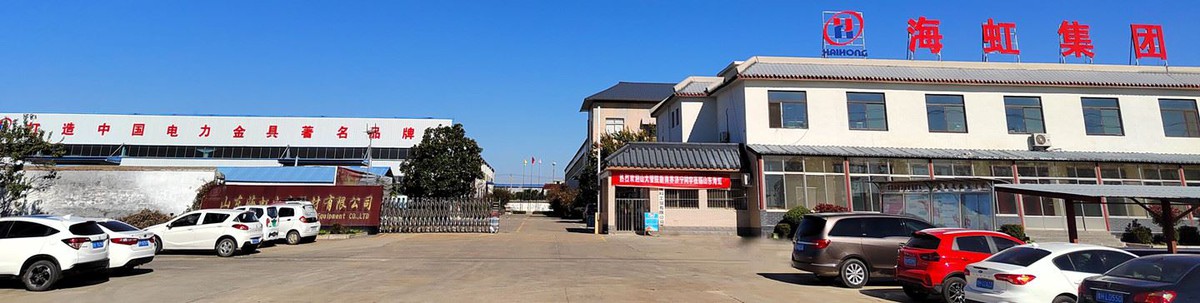
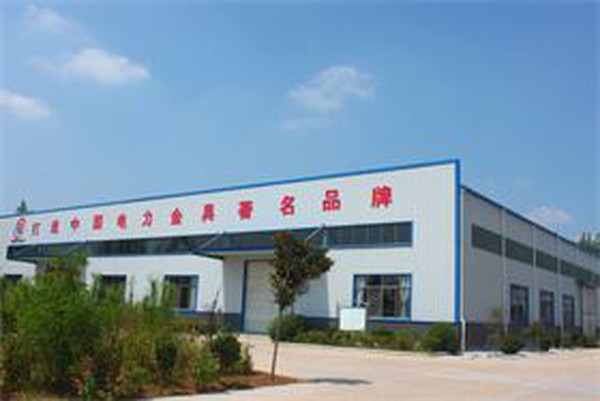
Shandong Haihong Power Equipment Co., Ltd. is located in wordwide cultural city - Qufu City,Shandong Province,China.Established in 2007.Our factory size is 20,000 square meters.it is specializing in the production of domestic ground beforehand with the optical fiber cable and line hardware production enterprise.Our production operation scope is involved in electric power,communication,railway,and many other fields.Through a modern scientific management,we have get a remarkable economic benefit.


Certificate
FAQ
As one of the most professional spiral vibration damper manufacturers and suppliers in China, we're featured by quality products and competitive price. Please rest assured to wholesale high quality spiral vibration damper in stock here from our factory.
Helical Spiral Vibration Damper, FL Spiral Vibration Damper, PVC Spiral Dampers